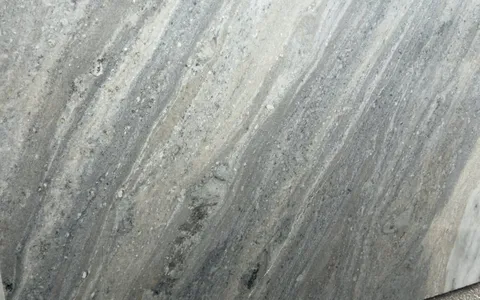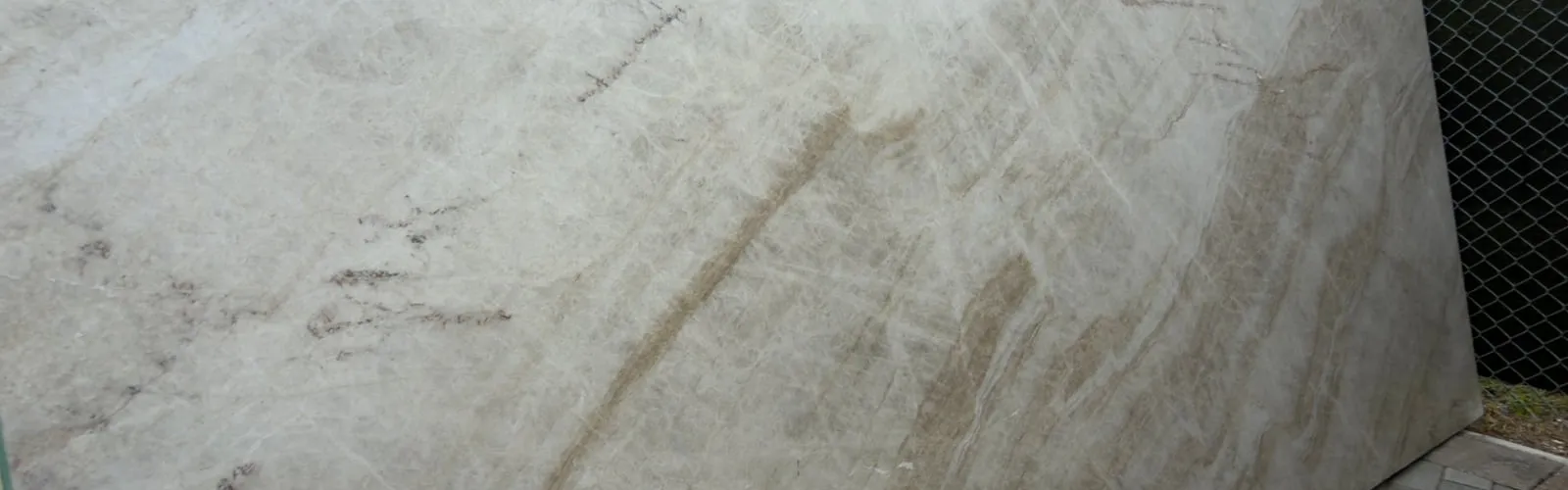
Quartz and quartzite sound almost the same, and they often sit next to each other in a showroom. They are very different materials, though. One is made in a factory, and the other is cut from a quarry. Knowing the difference helps you choose the right one for your kitchen, bathroom or outdoor space.
What is quartz?
Quartz is an engineered surface. Manufacturers blend roughly 90 to 95 percent ground natural quartz with resins and pigments, then press and cure the mix into slabs. The result is hard, non-porous and consistent from one end of the slab to the other.
Because it is designed, quartz comes in a huge range of looks, from solid white to soft marble style veining. Its resin is what makes it non-porous, and it is also what makes it sensitive to high heat and strong sunlight. See more on our quartz countertops page.
What is quartzite?
Quartzite is natural stone. It begins as sandstone, and over millions of years heat and pressure fuse its quartz grains into a dense, glassy rock. Quarries cut it into slabs, so each one is unique, with veining that often looks like marble.
Quartzite comes in soft whites, warm taupes and dramatic blues and greens. Because it is natural, it has some porosity and needs sealing. Learn more on our quartzite countertops page.
Is quartzite stronger than quartz?
In terms of hardness, yes. True quartzite is one of the hardest natural stones used for countertops, and it resists scratches extremely well. Quartz is also very scratch resistant in normal use, so for most households both feel tough day to day.
The bigger differences show up with heat and sun, not with knives. Quartzite is also very hard to cut, which makes fabrication more involved, while quartz is easier to shape and more forgiving.
Which one handles heat better?
Quartzite handles heat better. As a natural stone formed under heat and pressure, it is not bothered by the warmth of a pot or a baking dish, so it suits busy kitchens where people cook every day. A trivet is still a good habit for pans that come straight off the burner.
Quartz is not heat proof. Its resin can scorch, discolor or crack if a hot pan goes straight from the stove to the counter, and appliances that run hot for hours in one spot can also leave marks. With quartz, always use trivets.
Does quartzite need sealing?
Yes. Quartzite is dense, but it is still natural stone, and many slabs absorb some liquid, especially oil, so it needs sealing like any natural stone. At home, use a simple water test: if a few drops darken the stone within a few minutes, it is time to reseal.
Quartz never needs sealing. It is non-porous, so there is nothing for a sealer to fill. For many households, that single difference decides it.
Which one can go outdoors?
Quartzite can go outdoors, and quartz is best kept inside. Natural stone does not fade in sunlight, so quartzite works on lanais, pool bars and outdoor kitchens across Florida, as long as it stays sealed. Rain and humidity do not bother it once the sealer is in good shape.
Quartz is not recommended in direct sun. Ultraviolet light can fade or yellow the resin over time, and many manufacturers advise indoor use only. For outdoor projects, see our outdoor kitchen countertops page.
How can I tell real quartzite from a softer stone?
Ask for a test on a sample before you buy. Some stones are sold under quartzite names but contain softer minerals, like calcite, that can scratch or etch more easily. True quartzite passes both checks below without a mark, so they are worth doing on any slab you are considering. Two quick checks help:
- Etch test: leave a drop of lemon juice on a sample for a few minutes, rinse it, and look for a dull spot. True quartzite should not etch.
- Scratch test: try to scratch an unpolished edge of the sample with a steel knife. True quartzite should resist it.
If the stone etches or scratches easily, it may be closer to marble or dolomite. That does not make it a bad stone, but it changes how you care for it. Our dolomite countertops page explains that material.
Which one costs more?
It depends on the specific slab. Both materials range from simpler options to very premium ones, and the final price also depends on the size of your project, the edge profile and the cutouts. Quartzite is harder to cut, which adds shop time. The only reliable way to compare is an estimate for your actual layout.
Which one should I choose?
Choose quartz if you want the lowest upkeep, a consistent pattern and a surface that never needs sealing, and the counter will stay indoors. Choose quartzite if you want natural, one of a kind veining, better heat tolerance and a surface that can live outdoors, and you do not mind sealing it now and then.
Still on the fence? Our countertop materials comparison puts quartz and quartzite next to granite, marble, porcelain and dolomite in one table. The best next step is to see them together. Visit our Nokomis showroom, where you can run your hand over both and see how they look in the same light.