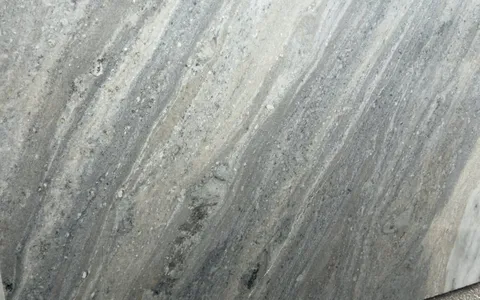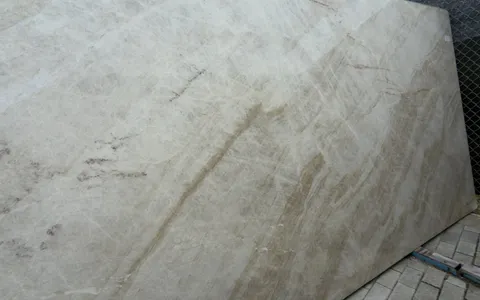
There is a lot of information out there about countertops, and some of it is simply wrong. Myths can push people toward the wrong stone, or away from one that would suit them perfectly. Here are seven we hear often at our showroom in Nokomis, with the facts that matter when you are choosing.
Are granite countertops indestructible?
No. Granite is a very durable natural stone, but it is not indestructible. It resists scratches and handles heat well, yet it can chip or crack under enough force. Dropping a heavy cast iron pan on an edge, standing on an unsupported overhang or striking a corner can all cause damage.
Granite also needs a little care. It is porous, so it should be sealed over time, and oil or wine left overnight on a worn sealer can leave a mark. Treat it like the tough, natural material it is, and it will last for decades. Read more on our granite countertops page.
Does marble stain easily?
Marble is more prone to etching than to staining. Etching happens when an acid, like lemon juice, wine, vinegar or tomato sauce, reacts with the calcite in the stone and leaves a dull, lighter spot. A stain is something that soaked in, like oil or coffee.
Proper sealing helps prevent stains on marble, but it does not stop etching. That is why marble owners wipe acidic spills right away, and why many choose a honed finish, which shows etching less than a high polish. Many people come to love the soft patina marble develops. Learn more on our marble countertops page.
Are quartz countertops 100 percent stain proof?
No. Quartz is highly resistant to stains because it is non-porous, but it is not completely stain proof. Strongly pigmented spills like turmeric, hair dye or permanent marker can leave a mark if they sit too long, and harsh chemicals can dull the resin.
The fix is easy: wipe spills promptly and clean with mild soap and water. Quartz also is not heat proof, so use trivets for hot pans. See our quartz countertops page for more care tips.
Are countertop seams always visible?
No. With modern fabrication and careful installation, seams can be nearly invisible, especially on quartz and on stones with busy patterns. A well made seam is tight, level and filled with a color matched adhesive.
Planning makes the biggest difference. During templating, seam placement is chosen with the layout and the pattern in mind, so the joint lands where it is least noticeable and the veins line up as well as possible. Long, highly veined countertops are the hardest to hide, which is why seeing your slab before it is cut helps. Our countertop fabrication page explains how this works.
Do all countertop materials need the same maintenance?
No. Different materials have very different needs. Quartz and porcelain are non-porous and never need sealing. Granite and quartzite are natural stones that need resealing over time. Marble and dolomite need regular sealing and extra care with acids.
Choosing a material you can care for is part of choosing the right one. If you never want to think about sealing, a natural stone may frustrate you, no matter how beautiful it is. Our countertop materials comparison shows the upkeep for all six materials in one table.
Is quartz heat proof because it is made of stone?
No. Quartz is mostly ground stone, but it is held together by resin, and resin does not like high heat. A hot pan straight from the burner can scorch, discolor or crack a quartz countertop. Use trivets every time.
If you cook a lot and often set pans down without thinking, granite or quartzite will be more forgiving. Both are natural stones that handle heat well, though a trivet is still a smart habit with any countertop.
Is DIY countertop installation easy and cost effective?
Usually not. Installing stone countertops requires precision and experience. A single slab can weigh hundreds of pounds, and pieces must be measured exactly, supported properly and leveled on the cabinets. Mistakes can lead to cracks, poor support around sinks and overhangs, and seams that do not line up.
Stone also cannot be stretched or patched if it is cut wrong, so an error often means buying new material. Professional installation starts with templating, a precise measuring visit, and ends with seams closed, sinks secured and faucet holes drilled where your faucet needs them. Our countertop installation page walks through each step.
What is the best way to avoid countertop myths?
See the stone in person and ask questions. Run your hand over the surface, look at how the veins move across a full slab, and ask how it handles heat, stains and sun. Our team is happy to explain the tradeoffs in plain language. Visit our Nokomis showroom to compare materials side by side.